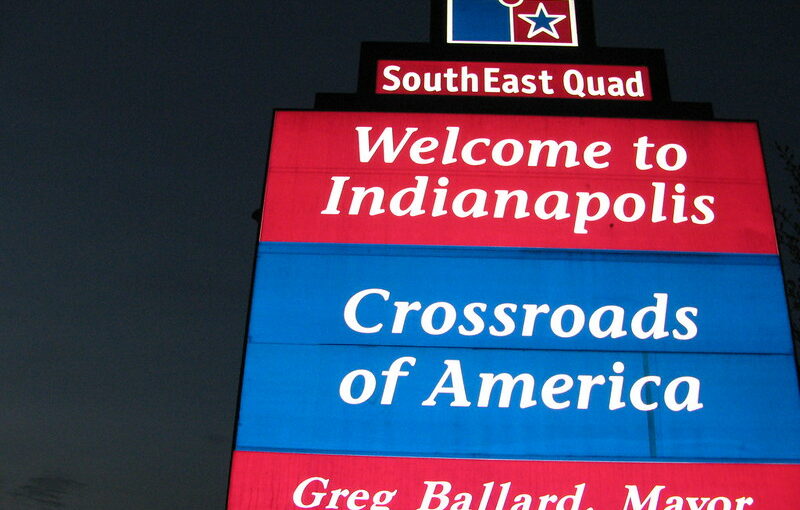
A quick summary of my MW2009

I'm posting this now to get it out of the way (and done in April) though I still haven't caught up on the Museums and the Web 2009 'backchannel', tidied my notes or read all the papers I wanted to read. I may update this later as I remember things I wanted to say.

Some strong themes (memes?) emerged during the conference. In general, while lots of great sites and projects were presented, including some lovely examples of projects breaking new ground in best practice, some of the most important ideas weren't about presenting new, flashy things but rather reflected a maturity in approach, and a consolidation of the role of the web in museums.

Breaking out of the bubble
From the informal conversations and unconference sessions proposed it seems to be an issue lots of people are struggling with – how do we communicate with managers, curators, educators to get them excited about the possibilities of the web; Nina's question about how we bring the levels of participation we're seeing on museum websites into the physical museum; how does (or how should) an integrated web program change an organisation; how do web teams go from mavericks to maturity?

And leading on from that: the post-conference challenge – do one thing in April

Conferences are great, especially one as social as Museums and the Web. Those inspiring late night conversations, the unexpected connections, putting faces to names… but I sometimes come away from conferences as cynical as I am enthused because before you know it, you're back at the same conference next year and nothing has changed.
The 'do one thing different when you get back' idea that suffused the crowd-sourced closing plenary really inspired me. Using the post-conference high to make one small change or proactively share with colleagues rather than letting it dissipate seemed to appeal to lots of people – I wonder if there's a way of finding out who's taken up the challenge. I hope I'm going to keep the inspiration to do the Right Thing, to keep pushing for quality when resources and energy are limited and projects are many.
I also realised that after all the inspiring conversations of last year some of us came back from MW2008 and ended up with BathCamp, so while the post-conference crash back to reality may be unavoidable, it doesn't mean you can't get something done anyway.
So I've been working away on the museums API wiki (possibly better known as 'museums and re-usable shareable data' but hey ho), tagging links 'mw2009' in delicious, and following up some contacts with email conversations. There's a lot more I should be doing, and if I haven't yet been in contact with you about something we discussed, let me know.

The unconference
I want to write a proper post about how it worked so that other people would feel comfortable running one of their own, but in the meantime, I'll just say that I was thrilled that it seems to have been so useful for people.

Twitter
The impact of Twitter was really evident at this conference. Apart from finding people for food or drinks, I used it most usefully to suggest an informal meetup of people interested in museum APIs during the Friday, and to find a whole bunch of people to go and eat noodles with. You can get a sense of the progress of the conference from my MW2009 tweets (from my 'event' twitter account).

Randomness
On a personal note, I also made up a new description for myself as I needed one in a hurry for moo cards: cultural heritage technologist. I felt like a bit of a dag but then the lovely Ryan from the George Eastman House said it was also a title he'd wanted to use and that made me feel better. And I won a 'backchannel award' for blogging from the conference, woo!

As well as earlier posts on the opening plenary and the unconference session on failure I still have more notes to dump into posts, I'll tag them all so you can find them under MW2009.

Notes from the closing plenary, MW2009

These are my quick and dirty notes from the closing plenary of the 2009 Museums and the Web conference .  If I've quoted you but gotten your name wrong, I'm very sorry – please let me know and I'll correct it.  I haven't put links in for anyone yet so I'll be editing the entry anyway.

'We are the program.'  Awards for blog posts, tweets, Flickr photos then David Bearman invited people to come up and talk about what they've learnt, what they'll take away.

Nina, Museum 2.0 – inspired by Max's keynote address. But she didn't feel that difference in the institution. Didn't see the transparency and openness that you get on the web, on their dashboard. Not saying they have to do that, but wants to bring up idea of participatory ghetto… forming relationships with visitors on the web, who'll show up at museums and wonder why the same relationship isn't reflected in the building. Pushing in institutions to establish parity, not to give up on physical space also being somewhere for openness and transparency. IMA – had experience of extreme cognitive dissonance. How can you start the conversation, taking great stuff from web world into physical environment of institutions. Her first time at MW.

Heather from Balbao – new to conference and museum world, great introduction.

Nate, Walker Art Centre – I always leave inspired, seen it happen every time- a month worth of trying new things, then it trickles off and fades… go to the wiki and take the post-conference challenge to do one thing in April – choose one task that you can achieve by the end of April. Distributed agile development … beyond API, everyone can benefit from going home and immediately doing just one thing. [eek I feel weird taking notes about my ideas]

Frankie, Rattle – be excited about tin mining.

Brian, UKOLN – danger that losing accessibility cos doing innovative things, but there have been some really great examples. Universally accessible – pushing it (the definition) of it forward.

Seb, Powerhouse – need to bring people in, curators, management.

Julie (?) – boundaries between web and physical boundaries – problematising the name of the conference. Is 'web' starting to constrain what we're about?

Nina – comment on that – conference in US called WebWise – lousy content but less funded projects, mostly director level people who go. How do we get these people in a situation that's more blended with the kind of people who are here?

Victoria, Smithsonian? carrying on Nina and Seb's point – spends first month being excited, but directors etc aren't going to come to conferences like this. You may have five minutes to articulate why something is important – and it's not heard when it's someone outside, even if you've been saying it on the inside for years. Having someone who's succeeded from outside, doing snippets of video or whatever – convincing.

David – seeing what can share back. Spend time at conference demanding people write papers, share slides… would really love for the post-conference discussion that takes place online to incorporate thoughts, experience about what doing. Extension into social space of a discourse we've never really had – how do you use that post-conference excitement… how do organisations change, which is becoming the centre of the discourse… take it further, keep talking to each other about how do you make it work.

Jennifer – the thing we can do by the end of April, if you write a report, share it with your colleagues. Let people pinch your ideas, send it out. Share the reports as well as the stuff that happens when we're right here.

Jon Pratty – we need a more social media within the museum.

Peter Samis – can remember this camaraderie in 1991… hearing it just as fresh now with people who are coming to their first conference, loving it… this is going to have legs, it's going to keep running, continue this spirit throughout the year.

Rich (another Rich) – haven't really felt the amount of community before, but have been coming since 1999. Being able to catch up on the things he missed while he was here.

Brian – people in the community can fall out, it's happened in the UK. People have strongly held views, need to depersonalise disputes, constructive criticism.

Scott (?) – we're not the only people talking about these subjects, it's happening in higher education, the commercial sector, not a whole of discussion here about what's happening out there and what impact it has here. Would be neat to do some headlines on what's going on in the world outside museum, add to the implications for this audience.
[This final session probably contributed quite a bit to my summary of MW2009 – I'd written the 'MW2009 challenge' a little while before (after discussions at the ice cream API meet) and it was wonderful to feel so much excitement (tempered with realistic cynicism) in the room about the positive changes we could make when we went back to our home institutions.]

The museum/academic divide, museum labels and mobile-accessible interpretation…

This post from the Smarthistory blog, Writing the Museum Label on a Wiki (and some other ideas), very neatly brings together some of the proposals and conversations from MW2009.

The authors suggest two 'notions' to bring about greater collaboration between museum educators (in the broadest sense) and academics, starting with the premise that:

For some time now, we have been publicly questioning the division that exists between two professional groups tasked with educating the public about art: those in museums (curators and educators) and those in the academy (art historians). These two communities share expertise that is sought by the museum visitor and the student, yet they rarely meet, too often do not attend the same conferences, and almost never collaborate.

I won't pre-empt their notions here – go and read the article, but I just wanted to highlight this quote:

Can the tired modernist fiction that the direct experience of the object must remain unencumbered by the frame of context really still be operative?

I really hope not!

(As an aside, my inner web geek is hugely amused by the irony of the '403' contained within the URL of the article – 403 is the HTTP status code for 'access forbidden'.)

Max Anderson, Indianapolis Museum of Art, 'Moving from virtual to visceral'

[My very rough notes, I've been distracted and missed bits, probably misheard things, etc, but at least it gives people who weren't there an idea of the flavour of the event.]

[Update – the video is online, you may find that easier to digest.]

Max Anderson, director of the Indianapolis Museum of Art – opening plenary at Museums and the Web 2009, 'Moving from virtual to visceral'.

Behind the applications we're producing, for an art museum in particular, we're looking for something beyond exposure to things. Felt, deep, elemental emotions.

Museums tend to define selves in terms of number of objects, acres, visitors… difficult to translate that endeavour online in a way that sticks. If you get too caught up in plumbing of technology, you forget about the outcomes. "In addition to bragging rights, what features of a museum should be online?"

[missed bits]

So much of what goes on behind scenes is critical to experience of front of house, give visitors an experience of that behind the scenes stuff.

Volunteers are important. Enormous swathe of public who could be continually engaged…

Review of what happens on site in museums: flirting, gossiping, looking, shopping, eating. Looking is wedged among all other activities. Is it heresy to admit that looking and learning are only a small part of a museum visit?

George Hein, visitor survival curves… pathways through museums. Opportunities to construct a narrative – but this isn't the normal approach to museum attendance. Choice and opportunity should govern what happens, rather than doing what we think the public demands.

Average time in front of a work of art is 3 seconds, it's 'glancing at picture to confirm that's what you've just read about' on the wall label. There are precious few moments when people linger in front of objects – it's like the Museum of Drag Racing. But look at the percentage of time learning versus that spent living in university. So much of time in college is extrinsic to learning. Give permission for that kind of experience in institutions, make a bond with visitors that's visceral, not just virtual.

Excessive orientation can compromise the experiential/learning environment.

There's too much clutter in experiential terms, we're torn constantly by stimuli. 'Virtual' museum programs – we fall in love with the technical solutions, but it's not obvious that they have the intended effect, and are also good for audiences.

An interactive map is still a map – show what's behind the velvet rope, it's sensual, appealing.

Databases – data cleaning before putting things online vs put everything online now and see how much have to clean up. Publishing databases about collections is just a baseline, just the beginning of something. Having high resolution images is, for lots of visitors, not much better than credits at the end of a movie. It's necessary, but not sufficient. We've only gotten to building the ground floor – we need to take visitors to the whole movie, get beyond showing them the credits.

Eschew the virtual, promote the visceral. What we collect has stories behind it, telling the stories is the key issue. What are the avenues for achieving something visceral in a museum visit?

Suspend commercial intrusion and attempts at mind control. Bruegel King.

Privatisation takes away the possibilities of adventure and play. Encourage voyeurism – show staff in action. Public wants to see how museums operate and function. CSI is a hit because it shows what goes on behind police work. We should take a cue from that appetite and enthusiasm.

[Missed a bit]

People enjoy being near original objects. Revel in the thrill of proximity to the original object.

Foster projection into another time, place or condition.

Disorient visitor, give them permission to move away from comfort zone. Encourage playtime, dream time.

Help visitors savour and retain memories and empathetic response. The empathetic response is the memory maker.

Help visitors apply that memory and empathetic response to daily life. Take the lesson embedded in museum objects, find the link to continued application to life after you've left the museum. Extensions of learning beyond what happens on site.

Teach now to practice connoisseurship at the mall – aesthetic standards around quality, etc.

Preferable scenario to onsite orientation – use pre-visit planning and post-visit environment. Encourage visitors to get ready before visit online beforehand. Kids who come on school visits to the Indianapolis Museum of Art get memberships for families, they can come back and share their learning with their parents.

Pre-visit – choose a path based on visit duration or thematic interest. Wander through the museum behind the scenes online. Show how complicated it is to run museums, "not as simple as switching on the lights and admiring things". Sharing this is useful, particularly given current climate.

On-site: deviate from planned path, improvise. The visitor doesn't need to be tied to our taxonomies. Make room, permission for visitor to experience it that way.

Post-visit – join Facebook, etc. We want to be part of your lives, not just a visit.

Encourage participation by telling the truth, the whole truth and nothing but the truth. We've been good at promoting and marketing and cheering ourselves on but not necessarily good at telling the truth.

It's about shining a light on how far you've got to go, not just what you've got to show off.

IMA had layoffs, their dashboard showing employee count dropped. If a museum has more people in development than in education or interpretation, then is bereft.

One of the truths we need to get out to visitors… permanent collection isn't permanent. Refreshment of new works of art on view. Objects are not permanently on display, they're in storage, lent, borrowed. Rhythm [of display, I think]. Permanent collections are invitational as well.

Attendance figures – "we don't necessarily think that's true but that's the number we quote". Is it a clicker with guards, estimates?

Mapping visitors by postcode, what postcodes aren't represented? Did he just say 'statistical porn'??

Making institutions more a part of your life, talking about collections. Also showing deaccessioning. Policy on deaccessioning on web – 'a no brainer'. Also put up db of works planning to deaccession as well as ones have deaccession. He has the uncomfortable feeling that he shilling for deaccession but they're really just trying to be transparent about process. Next process is to link funds from deaccession to artworks acquired with funds from its sale.

Charity Navigator. Don't trust what you see on the web. Methodology is flawed. We should present those stats ourselves, don't wait for someone else to be arbiter of our fortunes.

Why wait for someone else to publish your financial info, do it yourselves when it's ready.

Steve.museum – more empathetic. Opera in Italy in 19thC was riotous but now is antiseptic – don't make that mistake in museums.

Transcriptions, search terms is the magic of ArtBabble. Search results will take you to that second in the video. [Awesome!]

Click, Brooklyn Museum. Crowd-curated exhibition. Brooklyn Museum API – on screen, [missed stuff]. Te Papa. [Woo, check the love!]

Don't bet the farm on commercial applications that may go away.

[The end! I'll update when slides go online and tidy and correct if I can get more accurate info. Questions to come when I get a moment.]

Oh noes, a FAIL! Notes from the unconference session on 'failure' at MW2009

These are my really rough notes from the unconference session at Museums and the Web, written up quickly in order to capture the essence of the discussion and open it up for comment.

Susan Chun, Dana Mitroff Silvers, Bruce Wyman and I began and were later joined by Seb Chan and Jennifer Trant.

I explained my motivation in suggesting the session – intelligent, constructive failure is important. Finding ways to create a space for that conversation isn't something we do well at the moment.

Susan started the conversation by pointing out that there were different definitions or types of failure. Defining 'failure' more precisely is useful.

Types of failures include: over budget, badly implemented, badly specified, future failures.

Dana pointed out that we needed to define success as well as defining failure. A more nuanced understanding of failure is important, especially when hoping to encourage more people to talk about failure. Discussion about choosing the right metrics for success – the right metrics may vary depending on whether you're a funder or a department or whoever.

Funding models can set you up for failure.

Bruce pointed out that it's not the failure that matters, it's what you do with the failure.

Some apparent failures may not really be failures.

Are you funding the process or the product?

Not having the mechanism for exposing the knowledge is a failure.

The definitions of failure and success need to include the net gain for an organisation or in new/improved processes as well as the product.

What kind of environment is needed so that people can publish judgements of their own success or failure?

Susan suggested the MCN project registry would be a good place for this information.

What if it was routine to talk about what failed or succeeded in each project? Funding should reward people who talk about failures. Discussion about space for reflection on 'lessons learned' in project summation.

Agency is important – you talk about the failures of your own projects, other people don't dob you in.

Dana – talking about failures in a project should be a normal part of MW papers.

Label it 'lessons learned', not 'failure'.

Susan – [Remove roadblocks about what happens if funders hear you think your project failed in some way -] Talk to funders about requiring an examination or reflection of each project for failure in the same way the issue of open source development was tackled. Pro-active approach!

Me: when you're putting in for funding, you should have to show that you've talked to people with similar projects about the lessons they learned.

Susan – put ILMS (Institute of Museum and Library Services) reports online. [A small but practical thing to do]. Change the culture of secrecy.

Funding can be a carrot and a stick. Without that, institutional change is hard.

Points of resistance (some summing up):
understanding how to define failure/success
culture of secrecy
fear of exposure to funders
lacking the jargon to describe failure (which would also help normalise the process of discussing it openly)

Jennifer – if there aren't any negative consequences, why can't you talk about it?

General discussion about the need for early, continual dialogue about projects. It's difficult to talk about failures if you're not already talking about the project. Paraphrasing Seb -talking about it already in an informal context, like a blog, may help here.

Iterative, transparent reporting is important. It also helps other people talk about failures.

Susan – other causes of failures are project that never happened. Whether they missed their time, didn't get funding, whatever. Consider those as failures too, and talk about them. Everyone benefits, whether that's the person with the great idea that never got to see it happen, or people who've built on it later.

Talk about nascent projects. Exposing them to comment early can help prevent failure. Like the old crack about voting, public discussion about projects should happen early and often!

Hoarding ideas is pointless.

We need a template for talking about failure. Prompts or questions for consideration.

It's not just overall project failures, it can include institutional, departmental or structural failures.

Dana suggested confessional sessions, perhaps at the next Museums and the Web conference. Jennifer and Seb took it up, suggesting YouTube captures with disguised voices and silhouettes to make it easier, and encouraging discussion of failures by type or theme.

Discussion about the role of commentators, respondents in sessions. The voice of the one that didn't work.

Find an acceptable form of critical questions so that people can help prevent other projects failing, make the most of the experience out there.

Putting my money where my mouth is, one final comment from Seb was about a possible failure of the unconference sessions in not getting people together again at the end to report back. This was received constructively, and might happen during the final plenary.

Clay Shirky at Smithsonian 2.0

Below are my notes from watching the video of Clay Shirky at the Smithsonian 2.0 event on YouTube. I figure they might be useful to someone, though I'm sure I missed interesting points, and I didn't take notes on bits that sounded like his talk in London a little while later.

[I've been thinking generally about the Smithsonian 2.0 event, and realised that it doesn't matter that from the outside, the outcomes weren't groundbreaking – a lot of what they were saying seemed self-evident, or least what is generally seen as The Right Thing to do in cultural heritage tech circles – the process was the important part.

It's not so much what they're saying, it's the fact they're having the conversation. Their institution made room, literal as well as metaphoric, for the conversation, and they (presumably) invited people from all over their organisations to participate in those conversations. It's the importance of the visibility of the project, the big name guests, the resources invested – that's the groundbreaking part.]

Anyway, onto the talk.   There were some good soundbits – for ten years we had 'new media capabilities but old media messages'. In the days of super-distribution, 'the critical moment for media isn't production, it's distribution'.

[This next paragraph (or 16'50" – 19' in the video) is transcribed a bit more closely as I wanted to quote it in an article]
'Look at what Flickr's done. They've reversed the usual pattern of interest groups. Usually it's 'let's get everybody who cares about High Dynamic Range photography in a room, and then we'll share what we know'. Gather, then share. On Flickr, the pattern is 'share, then gather'. The artifact itself has created the surface to which the people adhere. It's created the environment for the conversation. Every artifact is a latent community. Which is to say, every artifact, in addition to being interesting to the people who come to look at it, or read it or watch it or what have you, has additional potential value in that all the people who are looking at it might also be interested in talking to each other. You can imagine a hub and spoke system, where the artifact is at the hub… the group that assembled here didn't have to know in advance they cared about High Dynamic Range photography, all they had to know about was that they liked that picture. If you think of the artifact as a hub, and there are spokes leading into it, which are the people who care about it, you can draw the line now going in both directions, it's not just that the artifact goes outwards and people can view it, people can talk back. Everybody sort of gets that hub and spoke model.  What's really astonishing is the lateral lines, the lines you can draw among the spokes, because there are many more of those lines to be drawn than there are [of] the hub and spoke. So if every artifact is a latent community, much of social value comes from having these kinds of convening platforms available for people to start sharing value in communities of practice.'

The enormous cost of professionally managed artefacts… Library of Congress project on preserving digital artefacts… metadata in cataloguing system not about managing ideas, about managing artefacts. (Ontologies) force organisations to be mind readers and fortune tellers.

What could go wrong? People take digital assets, repurpose them. It's already happened.  [So it's ok.]  So if repurposing already happens, how do we get value out of it?

Fear of being expected to control everything with your name on it; society has internalised idea that you're not.  [So it's really ok.]  As well as the kinds of uses you don't have to expect, you get the kinds of uses you don't have to feel responsible for.

If taking tax dollars, should do something for the public. When implement new forms of sharing, it also changes the way things happen in the institution. It would be easier for a curator to find something from one of the Smithsonian museums because of the Commons.

Question – if it's good, will they always come? Ans: no. Qu: how do you deal with that? Ans: the effect of failure on an institution is likelihood times cost. Spend more time discussing whether something is a good idea than would have spent just trying it (yes!). It's easy digitally to fail fast, cheaply, easy to learn from failure.

If you want to have something spread to the public, try it a few different ways. Don't make one perfect system then assume it will pass on to the public, be propagated. Have a few different ways of trying things. On average, the stuff that interests people propagates; you can't treat it as a distributed media buy. Have an economic structure where you can afford prizes cos haven't put all eggs in one basket.

Question – following up on tagging on Flickr – reactions to when moustaches were being tagged – people felt it degraded the value of the content.  Ans: aggregate value of tag is high, create cross-cutting collection. But it's always possible to find the banal stuff. Objection is not that people are saying these things, it's that "we have to hear it now". Previously separated spheres of expert and public discourse…

Question – how do you measure value – two different ways of measuring it, how do you bring them together?  Ans: so many different kinds of value, no institution can create them all, but they can host them. So, how much is this costing us and is there any reason to stop it from happening?  (But was the qu about digitisation and other things with up-front costs?)

If you think value is only things that you buy and manage and control… being a platform increases value for and the loyalty of the people who go there.

Woohoo!

The results of JISC's dev8D 'developer happiness' prize have been announced – congratulations to List8D and their "web 2.0-friendly reading lists" – it's something I'd love to see in my own uni course.

And yay the Three Lazy Geeks, because we came second! That was a lovely surprise, and really the glace cherry on the icing of the cake because the whole event was a great experience, and I really enjoyed working with Ian and Pete, as rushed as the whole thing was.

Yay! Three Lazy Geeks shortlisted for dev8D prize

We're in the top five, whoop!

The reviewers said, "Really comprehensive treatment of the problem and associated issues. Worth pursuing I think… As a solution this is a good idea and was produced by genuine collaboration at the Dev8D event."

So a short but happy developer post from me. The whole experience was lots of fun, and it would never have worked without Ian Ibbotson and Pete Sefton. I think the thing that I like most about it is that it not only re-uses existing tools, it fits with how people already work. It's not "this application will change your life, but first you have to change your life". I know that the (mostly junior) academics I've mentioned it to have loved the idea, so it might have real users if it was developed, which would be lovely.

Tim Berners-Lee at TED on 'database hugging' and linked data

This TED talk by Tim Berners-Lee: The next Web of open, linked data is worth watching if you've been 'wondering whatever happened to the semantic web?', or what this 'linked data' is about all.

I've put some notes below – I was transcribing it for myself and thought I might as well share it. It's only a selection of the talk and I haven't tidied it because they're not my words to edit.

Why is linked data important?

Making the world run better by making this data available. If you know about some data in some government department you often find that, these people, they're very tempted to keep it, to hug your database, you don't want to let it go until you've made a beautiful website for it. … Who am I to say "don't make a website…" make a beautiful website, but first, give us the unadulterated data. Give us the raw data now.

You have no idea, the number of excuses people come up with to hang onto their data and not give it to you, even though you've paid for it.

Communicating science over the web… the people who are going to solve those are scientists, they have half-formed ideas in their head, but a lot of the state of knowledge of the human race at the moment is in database, currently not sharing. Alzheimer's scientists … the power of being able ask questions which bridge across different disciplines is really a complete sea-change, it's very, very important. Scientists are totally stymied at the moment, the power of the data that other scientists have collected is locked up, and we need to get it unlocked so we can tackle those huge problems. if I go on like this you'll think [all data from] huge institutions but it's not. [Social networking is data.]

Linked data is about people doing their bit to produce their bit, and it all connecting. That's how linked data works. … You do your bit, everybody else does theirs. You may not have much data yourself, to put on there, but you know to demand it.

It's not just about the number of places where data comes. It's about connecting it together. When you connect it together you get this power… out of it. It'll only really pay off when everybody else has done it. It's called Linked Data, I want you to make it, I want you to demand it.

Sophie Germain, a tech heroine

When I first heard about Ada Lovelace Day, I started thinking about who I'd write about. I figured the usual suspects like Grace Hopper were out, but that left the field wide open – there are so many cool women around in different fields.

Yet despite all the possibilities in times and fields closer to my own, I've ended up thinking about a woman who who died 178 years ago. Mathematician and physicist Marie-Sophie Germain has been described as "probably the most profoundly intellectual woman that France has ever produced".  I have long-since forgotten my high school maths and physics, but I was drawn to her stubbornness, her tenacity, her sheer need to keep learning. about.com says:

After discovering geometry, Sophie Germain taught herself mathematics, and also Latin and Greek so that she could read the classical mathematics texts. Her parents opposed her study and tried to stop it, so she studied at night. They took away candles and forbid nighttime fires, even taking her clothes away, all so that she could not read at night. Her response: she smuggled candles, she wrapped herself in her bedclothes. She still found ways to study.

She was eventually recognised by the French Academy of Sciences, though her history is full of poignant reminders of the difficulties she faced.  PBS says:

Although she made no further contributions to proving Fermat's Last Theorem, others were to build on her work. She had offered hope that those equations in which n equals a Germain prime could be tackled, however the remaining values of n remained intractable.

After Fermat, Germain embarked on an eventful career as a physicist, a discipline in which she would again excel only to be confronted by the prejudices of the establishment. Her most important contribution to the subject was "Memoir on the Vibrations of Elastic Plates," a brilliantly insightful paper which was to lay the foundations for the modern theory of elasticity.

From a different perspective:

Although it was Germain who first attempted to solve a difficult problem, when others of more training, ability and contact built upon her work, and elasticity became an important scientific topic, she was closed out. Women were simply not taken seriously. (MacTutor History of Mathematics)

I think this is the saddest of all – Britannica says, "[d]uring the 1820s she worked on generalizations of her research but, isolated from the academic community on account of her gender and thus largely unaware of new developments taking place in the theory of elasticity, she made little real progress."

It's sad, not just on a personal level – imagine having that brain, that drive to collaborate and create, and not being taken seriously because of your gender – but can you imagine how much further the field of mathematics or physics might have advanced if she'd been supported and allowed to participate fully in the scientific community?

I couldn't find any images of Sophie Germain that I could clearly re-use, so instead you could go check out the range of faces tagged womensday on the Flickr Commons site, many of whom are scientists or inventors themselves. If I knew more about them I'd look for candidates for Modern Bluestocking.