'Digital challenges, digital opportunities' at MCGPlay, Belfast

These are my rough notes for my talk on 'Digital challenges, digital opportunities' at Museum Computer Group's Spring event, 'Engaging Visitors Through Play' (or #MCGPlay). My aim was to introduce the Museums Computer Group, discuss some of the challenges museums and their staff are facing and think about how to create opportunities from those challenges. I've posted my notes about the other talks at MCGPlay at 'Engaging Visitors Through Play' – the Museums Computer Group in Belfast.

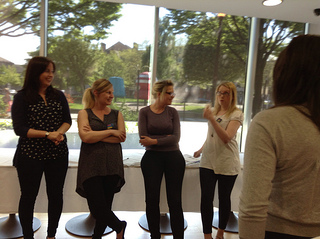
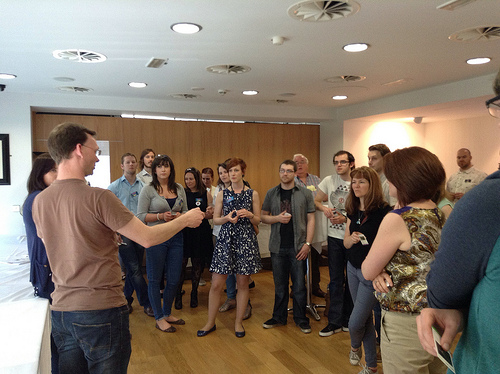
Play testing Alex's game at #MCGPlay

I started with some information about the MCG – our mission to connect, support and inspire people working with museum technology (whether technologists, curators, academics, directors or documentation staff) and how that informs the events we run and platforms like our old-school but effective mailing list, whose members who can between them answer almost any museumy question you can think of. As a practioner-led group of volunteers, the MCG can best fulfill its mission by acting as a platform, and with over 1000 members on our mailing list and hundreds of attendees at events, we can help people in the sector help and inspire each other in a mutually supportive space. We've also been involved in projects like the Semantic Web Think Tank (2006-2007), Mashed Museum hack days (2007, 2008) and LIVE!Museum (2009-2010). Apparently list discussions even inspired Culture24's Let's Get Real analytics project! In response to surveys with our members we're experimenting with more regional events, and with event formats like the 'Failure Swapshop' we trialled early this week and #drinkingaboutmuseums after the conference. (On a personal note, reviewing our history and past events was a lovely excuse to reflect on the projects and events the MCG community has been involved in and also to marvel at how young familiar faces looked at past events).

I'd reviewed the MCG list subject lines over the past few months to get a sense of the challenges or questions that digital museum people were facing:

  • Finding good web design/SEO/evaluation/etc agencies, finding good staff
  • The emergence of 'head of digital' roles
  • Online collections, managing digital assets; integration with Collections Management Systems and other systems
  • Integrating Collections Management Systems and 3rd party platforms like WordPress
  • Storytelling to engage the public
  • Museum informatics: CIDOC-CRM and other linked open data topics
  • 'Create once, publish everywhere' – can re-usable content really work?
  • Online analytics
  • Digital 3D objects – scanning, printing
  • Measuring the impact of social media
  • MOOCs (online courses)
  • Google Cultural Institute, Google Art Project, Artsy, etc
  • 3rd party tools – PayPal, Google Apps
  • Mobile – apps, well-designed experiences
  • Digital collections in physical exhibitions spaces
  • Touch tables/large-scale interactives
  • The user experience of user-generated content / co-produced exhibitions

Based on those, discussions at various meetings and reviews from other conferences, I pulled out a few themes in museum conversations:

  • 'Strategically digital' – the topic of many conversations over the past few years, including MCG's Museums on the Web 2012, which was actually partly about saying that best solution for a project might not involve technology. Being 'strategically digital' offers some solutions to the organisational change issues raised by the mismatch between web speed and museum speed, and it means technology decisions should always refer back to a museum's public engagement strategy (or infrastructure plans for background ICT services).
  • Mobile – your museum's website probably has over 20% mobile visitors, so if you're not thinking about the quality of their experience, you may be driving away business.
  • Immersive, challenging experiences – the influence of site-specific theatre, alternative reality games and transmedia experiences, the ever-new value of storytelling…
  • High-quality services integrated across the whole museum – new terms like service design and design thinking, are taking over from the old refrain of user-centred design, and going beyond it to test how the whole organisation appears to the customer – does it feel like a seamless, pleasurable (or at least not painful) experience? Museums are exploring new(ish) ways of thinking to solve old problems. As with mobile sites, you should be designing around your audiences needs, not your internal structures and complications.
  • Audience participation and engagement – we'll hear about games over the day, but also think about crowdsourcing, asking the audience to help with tasks or share their knowledge with you.

And a few more challenges:

  • New models of authority and expertise – museum authority is challenged not only by audiences expecting to 'curate' their own experience but also by younger staff or people who've come from other sectors and have their own ideas about digital projects.
  • Constantly changing audience expectations – if you've ever seen kids smoosh their hands on a screen because they expect it to zoom in response to their touch, you'll know how hard it is to keep up with consumer technologies. Expectations about the quality of the experience and the quality of the technology are always changing based on films, consumer products and non-museum experiences.
  • 'Doing more with less' (and then less again)
  • Figuring out where to ask for help – it can be hard to find your way through the jargon and figure out what language to use
  • Training and personal development – job swaps or mentoring might supplement traditional training

There'll always be new things to learn, and new challenges, so find supportive peers to learn with. The MCG community is one of the ways that people can learn from each other, but the museum sector is full of smart people who are generous with their time and knowledge. Run a discussion group or seminar series over lunch or in the pub, even if you have to rope in other local organisations to make it happen, join in mailing lists, find blogs to follow, look for bursaries to get to events. The international Museums and the Web past papers are an amazing resource, and Twitter hashtags can be another good place to ask for help (check out Dana Allen-Greil's 'Glossary of Museum-Related Hashtags' for US-based pointers).

I finished by saying that despite all the frustrations, it's an amazing time to work in or study the sector, so enjoy it! We shouldn't limit ourselves to engaging audiences in play when we could be engaging ourselves in play.

Museums Computer Group: connect, support, inspire me

On the trickiness of crowdsourcing competitions: some lessons from Sydney Design

I generally maintain a diplomatic silence about crowdsourcing competitions when I'm talking about crowdsourcing in cultural heritage as I believe spec work (or asking people to invest time in creating designs then paying just one 'winner') is unethical, and it's really tricky for design competitions to avoid looking like 'spec work'. I discovered this for myself when I ran the 'Cosmic Collections' mashup competition, so I have a lot of sympathy for museums who unknowingly get it wrong when experimenting with crowdsourcing. I also tend not to talk about poorly conceived or executed crowdsourcing projects as it doesn't seem fair to single out cultural heritage institutions that were trying to do the right thing against odds that ended up beating them, but I think the lessons to be drawn from the Sydney Design festival's competition are important enough to discuss here.

'Is it a free poster yet?'

A crowdsourcing competition model that the museum had previously applied successfully (the Lace Award and Trainspotting, with prizes up to $AUD20,000 and display in the exhibition for winning designs) had a very different reception when the context and rewards changed. When the Powerhouse Museum's design competition to produce the visual identity for the Sydney Design festival was launched with a $US1000 prize, the design community's sensitivity to spec work and 'free pitching' was triggered, and they started throwing in some sarcastic responses.  The public feedback loop created as people could see previous designs and realised their own would also be featured on the site had a 4Chan-ish feel of a fun new meme about it, and once the norm of satirical responses was set, it was only going to escalate.

More importantly, there was a sense that Sydney Design was pulling a swifty. As Kate Sweetapple puts it in How the Sydney Design festival poster competition went horribly wrong:

'The fundamental difference [to the previous competitions], however, is that by running the competition, the Museum pulled a substantial job – worth tens of thousands of dollars – out of the professional marketplace. The submissions to Love Lace and Trainspotting did not have a commercial context one year, and none the next.'

If the previous reward was mostly monetary, offering a lesser intrinsic reward in exchange for a previously extrinsic reward is unlikely to work. If there's a bigger reward than than the competition brief itself would suggest, one important lesson is to make it unavoidably obvious. In this case, the Sydney Design Team's response said 'the Museum would have engaged the winning designer for further work and remuneration required to roll out the winning design into a more comprehensive marketing campaign', but this wasn't clear in the original brief. Many museum competitions display highly-ranked entries in their gallery spaces, and being exhibited in the museum or festival spaces might have been another form of valid reward, but only if it worked as an aspiration for the competition's audience, who in this case might well have a breadth of experience and exposure that rendered it less valuable.

Finally, in working with museums online, I've noticed the harshness of criticism is often proportionate to how deeply people care about you or identify you with certain values they hold dear.  When you're a beloved institution, people who care deeply about you feel betrayed when you get things wrong. As one commentator said in With friends like these, who needs enemies?, 'Sydney Design are meant to be in our corner'. If you regard critics as 'critical friends' you can turn the relationship around (as Merel van der Vaart discusses in the 'Opening up' section of her post on lessons from the Science Museum's Oramics exhibition) and build an even stronger relationship with them. Maybe Sydney Design can still turn this around…

Does 'slow art day' work online?

Saturday was 'slow art day', and the Getty Museum (@GettyMuseum) shared a Robert Hughes clip that really resonated with me:

'We have had a gutful of fast art and fast food. What we need more of is slow art: art that holds time as a vase holds water: art that grows out of modes of perception and whose skill and doggedness make you think and feel; art that isn't merely sensational, that doesn't get its message across in 10 seconds, that isn't falsely iconic, that hooks onto something deep-running in our natures. In a word, art that is the very opposite of mass media.'

I was tied to my desk writing that day so I wondered how I could have a similar experience: can you 'do' slow art online? Assuming you can switch off all the other distractions of email, social media, flashing ads, etc, and ignore the fact that your house, office or library is full of other tasks and temptations, can you slow down and sit in front of one art work and have a similar experience through an image on a screen, or does being in a gallery add something to the process? On the other hand, high-resolution images and reflectance transformation imaging (RTI) mean you can see details you'd never see in a gallery so you can explore the artwork itself more deeply*. And to remove the screen from the equation, would looking at a really good print of a painting be as rewarding as looking at the original? And what of installations and sculpture?

Related to that, I've been wondering how to relate online collections (whether thematic, exhibition-style or old school catalogues) to audience motivations for visiting museums. I've just been reading a great overview of people's motivations for visiting museums in Dimitra Christidou's Re-Introducing Visitors: Thoughts and Discussion on John Falk’s Notion of Visitors’ Identity-Related Visit Motivations. Christidou summarises Falk and Storksdieck's 2005 research on 'museum-specific identities' reflecting visitor motivations:

  1. Explorers are driven by their personal curiosity, their urge to discover new things.
  2. Facilitators visit the museum on behalf of others’ special interests in the exhibition or the subject-matter of the museum.
  3. Experience seekers are these visitors who desire to see and experience a place, such as tourists.
  4. Professional hobbyists are those with specific knowledge in the subject matter of an exhibition and specific goals in mind.
  5. Rechargers seek a contemplative or restorative experience, often to let some steam out of their systems.
Once I'd gotten past the amusing mental image of Facebook's Mark Zuckerberg's head exploding at the concept of 'big' and 'small' online identities that change according to context, interests, motivations, etc**, I thought the article provided a useful framework for returning to the question of 'what are museum websites for?'. We can safely assume that most gallery sites consider the needs of 'professional hobbyists', but what of the other motivations? Some of these motivations are embedded in social experiences – do art sites enable multi-user experiences online, or do they assume that 'sharing' or facilitation only happens via social media? Does looking at art online go deep enough to count as an 'experience'? And how much of the 'recharging' experience is tied to the act of getting to a particular space at a particular time, or to the affordances of the space itself and its physical separation from most distractions of the world?

What new motivations should be added for online experiences of museum exhibitions and objects? What's enabled by the convenience, accessibility and discoverability of art online? And to return to slow art, how can museums use text and design to cue people to slow down and look at art for minutes at a time without getting in the way of people who want a quick experience? (And is this the same basic question I'd asked earlier about 'enabling punctum' or 'what's the effect of all this aggregation of museum content on the user experience'?)

* Assuming you don't look so closely that you slip into 'inappropriate peering'.
** I'm sure Zuckerberg knows people have different identities in different situations, it's just more convenient for Facebook not to care. Christopher 'moot' Poole opposed this push quite well in a series of talks in 2011.

Notes from 'Crowdsourcing in the Arts and Humanities'

Last week I attended a one-day conference, 'Digital Impacts: Crowdsourcing in the Arts and Humanities' (#oxcrowd), convened by Kathryn Eccles of Oxford's Internet Institute, and I'm sharing my (sketchy, as always) notes in the hope that they'll help people who couldn't attend.

Stuart Dunn reported on the Humanities Crowdsourcing scoping report (PDF) he wrote with Mark Hedges and noted that if we want humanities crowdsourcing to take off we should move beyond crowdsourcing as a business model and look to form, nurture and connect with communities.  Alice Warley and Andrew Greg presented a useful overview of the design decisions behind the Your Paintings Tagger and sparked some discussion on how many people need to view a painting before it's 'completed', and the differences between structured and unstructured tagging. Interestingly, paintings can be 'retired' from the Tagger once enough data has been gathered – I personally think the inherent engagement in tagging is valuable enough to keep paintings taggable forever, even if they're not prioritised in the tagging interface.  Kate Lindsay brought a depth of experience to her presentation on 'The Oxford Community Collection Model' (as seen in Europeana 1914-1918 and RunCoCo's 2011 report on 'How to run a community collection online' (PDF)). Some of the questions brought out the importance of planning for sustainability in technology, licences, etc, and the role of existing networks of volunteers with the expertise to help review objects on the community collection days.  The role of the community in ensuring the quality of crowdsourced contributions was also discussed in Kimberly Kowal's presentation on the British Library's Georeferencer project. She also reflected on what she'd learnt after the first phase of the Georeferencer project, including that the inherent reward of participating in the activity was a bigger motivator than competitiveness, and the impact on the British Library itself, which has opened up data for wider digital uses and has more crowdsourcing projects planned. I gave a paper which was based on an earlier version, The gift that gives twice: crowdsourcing as productive engagement with cultural heritage, but pushed my thinking about crowdsourcing as a tool for deep engagement with museums and other memory organisations even further. I also succumbed to the temptation to play with my own definitions of crowdsourcing in cultural heritage: 'a form of engagement that contributes towards a shared, significant goal or research question by asking the public to undertake tasks that cannot be done automatically' or 'productive public engagement with the mission and work of memory institutions'.

Chris Lintott of Galaxy Zoo fame shared his definition of success for a crowdsourcing/citizen science project: it has to produce results of value to the research community in less time than could have been done by other means (i.e. it must have been able to achieve something with crowd that couldn't have without them) and discussed how the Ancient Lives project challenged that at first by turning 'a few thousand papyri they didn't have time to transcribe into several thousand data points they didn't have time to read'.  While 'serendipitous discovery is a natural consequence of exposing data to large numbers of users' (in the words of the Citizen Science Alliance), they wanted a more sophisticated method for recording potential discoveries experts made while engaging with the material and built a focused 'talk' tool which can programmatically filter out the most interesting unanswered comments and email them to their 30 or 40 expert users. They also have Letters for more structured, journal-style reporting. (I hope I have that right).  He also discussed decisions around full text transcriptions (difficult to automatically reconcile) vs 'rich metadata', or more structured indexes of the content of the page, which contain enough information to help historians decide which pages to transcribe in full for themselves.

Some other thoughts that struck me during the day… humanities crowdsourcing has a lot to learn from the application of maths and logic in citizen science – lots of problems (like validating data) that seem intractable can actually be solved algorithmically, and citizen science hypothesis-based approach to testing task and interface design would help humanities projects. Niche projects help solve the problem of putting the right obscure item in front of the right user (which was an issue I wrestled with during my short residency at the Powerhouse Museum last year – in hindsight, building niche projects could have meant a stronger call-to-action and no worries about getting people to navigate to the right range of objects).  The variable role of forums and participants' relationship to the project owners and each other came up at various points – in some projects, interactions with a central authority are more valued, in others, community interactions are really important. I wonder how much it depends on the length and size of the project? The potential and dangers of 'gamification' and 'badgeification' and their potentially negative impact on motivation were raised. I agree with Lintott that games require a level of polish that could mean you'd invest more in making them than you'd get back in value, but as a form of engagement that can create deeper relationships with cultural heritage and/or validate some procrastination over a cup of tea, I think they potentially have a wider value that balances that.

I was also asked to chair the panel discussion, which featured Kimberly Kowal, Andrew Greg, Alice Warley, Laura Carletti, Stuart Dunn and Tim Causer.  Questions during the panel discussion included:

  • 'what happens if your super-user dies?' (Super-users or super contributors are the tiny percentage of people who do most of the work, as in this Old Weather post) – discussion included mass media as a numbers game, the idea that someone else will respond to the need/challenge, and asking your community how they'd reach someone like them. (This also helped answer the question 'how do you find your crowd?' that came in from twitter)
  • 'have you ever paid anyone?' Answer: no
  • 'can you recruit participants through specialist societies?' From memory, the answer was 'yes but it does depend'.
  • something like 'have you met participants in real life?' – answer, yes, and it was an opportunity to learn from them, and to align the community, institution, subject and process.
  • 'badgeification?'. Answer: the quality of the reward matters more than the levels (so badges are probably out).
  • 'what happens if you force students to work on crowdsourcing projects?' – one suggestion was to look for entries on Transcribe Bentham in a US English class blog
  • 'what's happened to tagging in art museums, where's the new steve.museum or Brooklyn Museum?' – is it normalised and not written about as much, or has it declined?
  • 'how can you get funding for crowdsourcing projects?'. One answer – put a good application in to the Heritage Lottery Fund. Or start small, prove the value of the project and get a larger sum. Other advice was to be creative or use existing platforms. Speaking of which, last year the Citizen Science Alliance announced 'the first open call for proposals by researchers who wish to develop citizen science projects which take advantage of the experience, tools and community of the Zooniverse. Successful proposals will receive donated effort of the Adler-based team to build and launch a new citizen science project'.
  • 'can you tell in advance which communities will make use of a forum?' – a great question that drew on various discussions of the role of communities of participants in supporting each other and devising new research questions
  • a question on 'quality control' provoked a range of responses, from the manual quality control in Transcribe Bentham and the high number of Taggers initially required for each painting in Your Paintings which slowed things down, and lead into a discussion of shallow vs deep interactions
  • the final questioner asked about documenting film with crowdsourcing and was answered by someone else in the audience, which seemed a very fitting way to close the day.
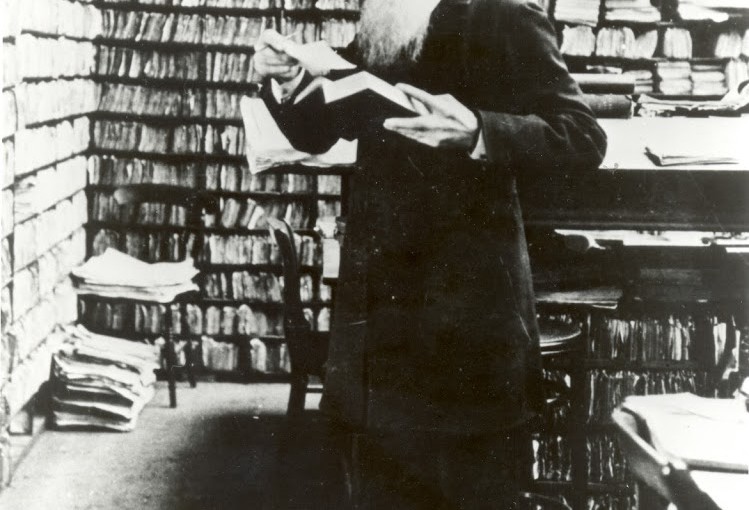
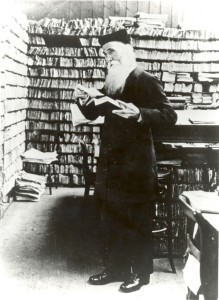
James Murray in his Scriptorium with thousands of word references sent in by members of the public for the first Oxford English Dictionary. Early crowdsourcing?

If you found this post useful, you might also like Frequently Asked Questions about crowdsourcing in cultural heritage or my earlier Museums and the Web paper on Playing with Difficult Objects – Game Designs to Improve Museum Collections.

'An (even briefer) history of open cultural data' at GLAM-Wiki 2013

These are some of my notes for my invited plenary talk at GLAM-Wiki 2013 (Galleries, Libraries, Archives, Museums & Wikimedia, #GLAMWiki), held at the British Library on April 12-13, 2013. I don't think I stuck that closely to them on the day, and in the interests of brevity I've left out the 'timeline' bits (but you can read about some of them in a related MuseumID article, 'Where next for open cultural data in museums?') to focus on the lessons to be learnt from changes so far. There were lots of great talks and discussion at the event, you can view some of the presentations on Wikimedia UK's YouTube channel.

A (now very) brief history of open cultural data

Firstly, thank you for the invitation to speak… This morning I want to highlight some key moments of change in the history of open cultural data – a history not only of licenses and data, but also of conversations, standards, and collaborations, of moments where things changed… I've included key moments from funders, legislative influences and the commercial sector too, as they create the context in which change happens and often have an effect on what's considered possible. I'll close by considering some of the lessons learnt.

[Please help improve this talk]

A caveat – there may well be a bias towards the English-speaking world (and to museums, because of my background). If you know of an open GLAM (gallery, library, archive, museum) data source I've missed, you can add it to the open cultural data/GLAM API wiki… or Lotte's Belice's list of open culture milestones  timeline.

Definitions

'open cultural data' is data from cultural institutions that is made available for use in a machine-readable format under an open licence. But each word in open, cultural, data is slightly more complicated so I'll unpack them a little…

Open

Office clerks, FNV. Voorlichting.

While the degree of openness required to be 'open' data can be contentious, at its simplest, 'open' refers to content that is available for use outside the institution that created it, whether for school homework projects, academic monographs or mobile phone apps. 'Open' may refer to licences that clarify the permissions and restrictions placed on data, or to the use of non-proprietary digital technologies, or ideally, to a combination of both open licences and technologies.

Ideally, open data is freely available for use and redistribution by anyone for any purpose, but in reality there are often restrictions. GLAMs may limit commercial use by licensing content for 'non-commercial use only', but as there is no clear definition of 'non-commercial use' in Creative Commons licences, some developers may choose not to risk using a dataset with an unclear licence. GLAMs may also release data for commercial use but still require attribution, either to help retain the provenance of the content, to help people find their way to related content or just because they'd like some credit for their work. GLAMs might also release data under custom licences that deal with their specific circumstances, but they are then difficult to integrate with content from other openly-licensed datasets.

Hybrid licensing models are a pragmatic solution for the current environment. They at least allow some use and may contribute to greater use of open cultural data while other issues are being worked out. For example, some institutions in the UK are making lower resolutions images available for re-use under an open licence while reserving high resolution versions for commercial sales and licensing. Or they may differentiate between scholarly and commercial use, or use more restrictive licences for commercially valuable images and release everything else openly.

I think this type of access is better than nothing, particularly if organisations can learn from the experience and release more data next time. Because these hybrid models are often experimental, their reception is important, and it's helpful for GLAMs to be able to show they've had a positive impact and hopefully helped create relationships with groups like Wikipedia.

Cultural

Cultural data is data about objects, publications (such as books, pamphlets, posters or musical scores), archival material, etc, created and distributed by museums, libraries, archives and other organisations.

Data

It's a useful distinction to discuss early with other cultural heritage staff as it's easy to be talking at cross-purposes: data can refer to different types of content, from metadata or tombstone records (the basic titles, names, dates, places, materials, etc of a catalogue record), to entire collection records (including data such as researched and interpretive descriptions of objects, bibliographic data, related themes and narratives) to full digital surrogates of an object, document or book as images or transcribed text. Some organisations release open metadata, others release all their data including their images. If you can't do open data (full content or 'digital surrogates' like photographs or texts) then at least open up the metadata (data about the content) as e.g. CC0 and the rest with another licence. Releasing data may involve licensing images, offering downloads from catalogue sites; 'content donations', APIs and machine-facing interfaces; term lists, etc. Much of the data that isn't images isn't immediately interesting, and may be designed for inter-collections interoperability or mashups rather than media commons.

Why is open cultural data important?

Before I go on, why do we care? Open cultural data is the foundation on which many projects can be built. It helps achieve organisational goals, mission; can help increase engagement with content; can create 'network effect' with related institutions; can be re-used by people who share your goals around access to knowledge and information – people like Wikipedians.

Some key moments in open cultural data

Events I discussed included the founding of Wikimedia, Europeana and Flickr Commons, previous GLAM-Wiki conferences, changes in licences for art images, library catalogue records and museum content, GLAM APIs and linked data services and the launch of the Digital Public Library of America next week.

Lessons learnt

Many of the changes are the results of years of conversation and collaboration – change is slow but it does happen. GLAMs work through slow iterations – try something, and if no-one dies, they'll try something else. We are all ambassadors, and we are all translators, helping each domain understand the other.

Contradictory things GLAMs are told they must do

  • Give content away for the benefit of all
  • Monetise assets; protect against loss of potential income; protect against mis-use of collections; conserve collections in perpetuity; protect the IP of artists; demonstrate ROI on digitisation

It's not easy for GLAMs to release all their data under an entirely open licence, but they don't do it just to be annoying – it's important to understand some of the pressures they're under.  For example, GLAMs usually need to be able to track uses of their data and content to show the impact of digitising and publishing content, so they prefer attribution licences.

The issue of potential lost income – imaginary money that could be made one day if circumstances change, or profit that someone else makes off their opened data – is particularly difficult as hard to deal with [and here I ad-libbed, saying that it was like worrying about failing to meet the love of your life because you got on a different tube carriage – you can't live your life chasing ghosts]. Ideally, open data needs to be understood as an input to the creative economy rather than an item on the balance sheet of an individual GLAM.

GLAMs worry about reputational damage, whether appearing on the front page of a tabloid newspaper for the 'wrong' reasons, questions being asked in Parliament, or critique from Wikipedians.  Over time, their mindset is changing from keeping 'our data' to being holders, custodians of our shared heritage.

Conversations, communities, collaborations

Conversations matter… we're all working towards the same goal, but we have different types of anxieties and different problems we have to address.

GLAMs are about collections, knowledge, and audiences. Unlike most online work, they are used to seeing the excitement people experience walking through their door – help GLAMs understand what Wikipedians can do for different audiences by making those audience real to them. GLAMs are also used to being wined and dined before you lay the hard word on them. Just because you don't need to ask for permission to use content doesn't mean you shouldn't start a conversation with an organisation. There are lots of people with similar goals inside organisations, so try to find them and work with them. Trust is a currency, don't blow it!

Being truly collaborative sometimes means compromising (or picking your battles) and it definitely means practising empathy. Open data people could stop talking about open data as something you *do* to GLAMs, and GLAMs could stop thinking open data people just want to make your life difficult.

The role of higher powers

Government attitudes to open data make a big difference and they can also change the risks associated with publishing orphan works.  Governments can also help GLAMs open up their content by indemnifying them against the chance that someone else will monetise their data – consider it not a failure of the GLAM but a contribution to the creative and digital economy.

Things that are better than a poke in the eye with a sharp stick

  1. Kittens (and puppies)
  2. Cultural data that's available online but isn't (yet) openly licensed
  3. Cultural data online that is licensed for non-commercial use

Yes, the last two aren't ideal, but they are great deal better than nothing.

Into the future…

GLAMs and Wikipedians may move at different paces, and may have different priorities and different ways of viewing the world, but we're all working towards the same goals. Not everything is as open, but a lot more is open than it used to be. I sensed yesterday [the first day of the conference] that there are still some tensions between Wikimedians and GLAMers, moments when we need to take a deep breath and put empathy before a pithy put down, but I loved that Kat Walsh's welcome yesterday described how Wikipedia used to focus on how different from others but now focuses on reaching out to others and figuring out how we're the same.

GLAMs and Wikipedians have already used open cultural data to make the world a better place. Let's celebrate the progress we've made and keep working on that…

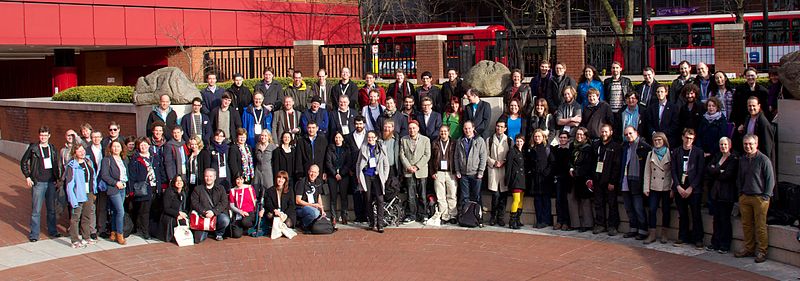
GLAM-WIKI 2013 Friday attendees photograph by Mike Peel (www.mikepeel.net).

Congratulations to everyone who helped make it a great event, but particularly to Daria Cybulska and Andrew Gray (@generalising) for making everything work so smoothly, and Liam Wyatt (@wittylama) for the original invitation to speak.

If an app is the answer…

…what was the question?*  And seriously, what questions should museums ask before investing in a mobile or tablet app?

First, some background. In We’re not ‘appy. Not ‘appy at all., Tom Loosemore of the Government Digital Service (GDS) gives examples of the increases in mobile traffic to UK government sites, including up to 60% mobile visits to site with complex transactions like booking driving tests.

For a cultural heritage perspective: as part of the Culture24 Let's Get Real project, I looked at the percentage of mobile visits (and visitors) to 22 cultural websites for Jan 1, 2012 – September 2, 2012 (an extended time to try and reduce the effect of the Olympics) and found that on average, museums and arts organisations were already seeing an average of 20% mobile visits.  I also reported the percentage change from the same period last year so that people could get a sense of the velocity of change: on average there was a 170% increase in mobile visits to cultural websites compared to the same period in 2011.

We'll re-run the stats when writing the final report in July, but in the meantime, there's a recent significant increase in web traffic from tablet devices to take into account.  In BBC iPlayer: tablet viewing requests nearly double in two months the Guardian reported BBC figures:

"Tablets' share of total iPlayer requests grew from just 6% (TV only: 7%) in January 2012 to 10% (12%) in November and 15% (18%) last month. Smartphone requests have seen similar growth from 6% (TV only: 6%) of the total a year ago to 16% (18%) in January. [… ]A spokesman said it is thought the rise of the "phablet" – smartphones that are almost as big as a tablet, such as the Samsung Note – that have driven the surge."

Some museums are reporting seeing 40-50% increases in tablet traffic in the past few months. So, given all that, are apps the answer?  Over to Loosemore:

"Our position is that native apps are rarely justified. […] Apps may be transforming gaming and social media, but for utility public services, the ‘making your website adapt really effectively to a range of devices’ approach is currently the better strategy. It allows you to iterate your services much more quickly, minimises any market impact and is far cheaper to support."

Obviously there are exceptions for apps that meet particular needs or genres, but this stance is part of their Government Digital Strategy:

"Stand-alone mobile apps will only be considered once the core web service works well on mobile devices, and if specifically agreed with the Cabinet Office." 

So if your cultural organisation is considering an app, perhaps you should consider the questions the GDS poses before asking for an exemption to the requirement to just build a responsive website:

  1. Is our web service already designed to be responsive to different screen sizes? If not, why not?
  2. What is the user need that only a native/hybrid app can meet?
  3. Are there existing native/hybrid apps which already meet this user need?
  4. Is our service available to 3rd parties via an API or open data? If not, why not?
  5. Does meeting this need justify the lifetime cost of a native or hybrid app?
What questions should we add for cultural heritage, arts and educational organisations?  (My pet hate: are you creating amazing content that's only accessible to people with the right device?) And since I know I'm being deliberately provocative – what exceptions should be allowed? What apps have you seen that could only work as an app with current technology?

* I can't claim credit for the challenge 'if an app is the answer, what was the question', it's been floating around for a while now and possibly originated at a Let's Get Real workshop or conference.

Notes from 'The Shape of Things: New and emerging technology-enabled models of participation through VGC'

I've just spent two days in Leicester for the 'The Shape of Things: New and emerging technology-enabled models of participation through VGC' conference at the school of Museum Studies, part of the AHRC-funded iSay project focusing on Visitor-Generated Content (VGC) in heritage institutions. There will be lots of posts on the conference blog, so these are just some things that struck me or I've found useful concepts for thinking about my own museum practice.

I tweeted about the event as I headed to Leicester, and that started a conversation about the suitability of the term 'visitor-generated content' that continued through the event itself. I think it was Giasemi who said that one problem with 'visitor-generated content' is that the term puts the emphasis on content and that's not what it's about. Jeremy Ottevanger suggested 'inbound communications' as a possible replacement for VGC.

The first keynote was Angelina Russo, who reminded us of the importance of curiosity and of finding ways to make museum collections central to visitor engagement work. She questioned the value of some comments left on museum collections other than the engagement in the process of leaving the comment. Having spent too much time reviewing visitor comments, I have to agree that not all comments (particularly repetitive ones) have inherently valuable content or help enhance another visitor's experience – a subject that was debated during the conference. A conversation over twitter during the conference with Claire Ross helped me realise that designing interfaces that respect and value the experience of both the commenter and reading is one of the interesting challenges in digital participation.

She then used Bourdieu's ideas around 'restricted cultural production' to characterise the work of curators as producers who create cultural goods for other producers, governed by specific norms and sanctions, within relatively self-contained communities where their self-esteem depends on peers. However, this creates a tension between what curators think their role is and what museums need it to be in an age when museums are sites of large-scale cultural production for 'the public at large', driven by a quest for market share and profits. Visitor-generated content and the related issues of trust, authority, or digitisation highlight the tensions between these models of restricted or large-scale cultural production – we need to find 'a pathway through the sand'. Angelina suggested that a version of Bourdieu's 'gift economies', where products are created and given away in return for recognition might provide a solution, then asked what's required to make that shift within the museum. How can we link the drive for participation with the core work of museums and curatorial scholarship? She presented a model (which I haven't gone into here) for thinking about 'cultural communication', or communication which is collection-led; curiosity-driven; is scholarly; experiential; and offers multi-platform opportunities for active cultural participation, engagement and co-creation.

Carl Hogsden from the Museum of Archaeology and Anthropology and University of Cambridge talked about the Reciprocal Research Network and moving beyond digital feedback to digital reciprocation. This project has been doing innovative work for a long time, so it was good to see it presented again.

Jenny Kidd from Cardiff University posed some useful questions in 'VGC and ethics – what we might learn from the media and journalism' – it's questionable how much VGC (or user-generated content, UGC) has actually changed journalism, despite the promise of increased civic engagement, diversity, more relevant news and a re-framing of the audience as active citizens rather than consumers. One interesting point was the impact of the 'Arab Spring' on UGC – content that couldn't be verified couldn't be shown by traditional media so protesters started including establishing shots and improving the quality of their recordings. This was also the first of several papers that referenced 'Whose cake is it anyway', a key text for conversations about visitor participation and museums and Jenny suggested that sometimes being seen to engage in participatory activity is currently possibly end goal in itself for a museum. She presented questions for further research and debate including: is the museum interested in quality of process or product of VGC and do creators feel the same? How does VGC fit in workflow models of museums?

Giasemi Vavoula's paper on 'The role of VGC in digital transformations in Museum Learning' (slides) was fascinating, particularly as it presented frameworks for audience engagement taken from learning theory that closely matched those I'd found from studies of citizen science and engagement in heritage and sport (e.g. cognitive engagement model – highest is theorising, then applying, relating, explaining, describing, note-taking, memorising… Good visitor experiences get most visitors to use the higher engagement level processes that the more focused visitors use spontaneously). I love learning from Learning people – in museum learning/visitor studies, social interaction facilitates learning; visitors negotiate the meanings of exhibits through conversation with their companions. Giasemi called for museums to weave VGC into the fabric of visitors social contexts; to scaffold and embed it into visiting experience; and to align with visitors and organisations' social agendas.

In 'A Tale of Two Workhouses' Peter Rogers and Juliet Sprake spoke of 'filling in the gaps rather than being recipients of one-way information flow', which tied in nicely with discussion around the role of curiosity in audience participation.

In the afternoon there was a Q&A session with Nina Simon (via skype). A number of the questions were about sustainability, designing for mixed contexts, and the final question was 'where next from here?'. Nina advised designing participatory experiences so that people can observe the activity and decide to take part when they're comfortable with it – this also works for designing things that work as spectator experiences for people who don't want to join in. Nina's response to a question about 'designing better questions' – 'find questions where you have genuine interest in what the visitor has to say about it' – resonated with wider discussion about meaningful visitor participation. Nina talked about the cumulative effect of participatory work on the museum itself, changing not only how the museum sees itself but how others see it – I wonder how many museums in the UK are engaging with visitor participation to the extent that it changes the museum itself? Nina also made the point that you tend to have either highly participatory process to make conventional product, or conventional process to make highly participatory product, and that not everything has to be wholly participatory from start to finish, which is useful for thinking how co-creative projects.

On Friday morning I gave a keynote on 'crowdsourcing as productive engagement with cultural heritage'. My slides for 'Crowdsourcing as productive engagement with cultural heritage' are now online. I partly wanted to problematise the power relationships in participatory projects – whose voice can affect change? – and to tease out different ways of thinking about crowdsourcing in cultural heritage as productive both in terms of the process (engaging in cultural heritage) and the product (the sheer number of items transcribed, corrected, etc). I've been going back to research on motivations for volunteering in cultural heritage, working on open source projects and reviewing discussions with participants in crowdsourcing projects, and I hope it'll help people design projects that meet those altruistic, extrinsic and intrinsic motivations. Thinking about my paper in the context of the other presentations also got me thinking about the role of curiosity in audience engagement and encouraging people to start researching a subject (whether a ship's history, an individual or a general topic) more deeply. On a personal note, this paper was a good chance to reflect on the different types of audience engagement with museum collections or historic sources and on the inherent value of participation in cultural heritage projects that underpin my MSc and PhD research and my work in museums generally.

Areti Galani presented research she'd done with Rachel Clarke (Newcastle University), and asked 'how can accessible technology lead to inaccessible participation paradigms?'. I was really interested in the difference between quality of the visitor contributions in-gallery vs online (though of course 'quality' is a highly subjective term), a question that surfaced through the day. Areti's research might suggest that building in some delay in the process of contributing in-gallery could lead to better quality (i.e. more considered) contributions. The novelty of the technology used might also have an effect – 'pen-happy visitors' who used the technology for the sake of interacting with it but didn't know what to do after picked up the pen.

The paper from Jeremy Ottevanger (Imperial War Museums) on "Social Interpretation" as a catalyst for organisational change generated more discussion on possible reasons why online comments on museum sites tend to be more thoughtful than in-gallery comments, with one possible reason being that online commenters have deliberately sought out the content, so already have a deeper engagement with those specific items, rather than just coming across them while moving through the physical gallery. Jeremy talked about the need for the museum to find an internal workflow that was appropriately responsive to online comments – in my experience, this is one of the most difficult issues in planning for digital projects. Jeremy presented a useful categorisation of online contributions as personal (emotional, opinion, personal information, anecdotes, family history), requests and queries (object info, valuation, family history, digitisation and licencing, offering material, access, history, general/website), and informational (new information, corrections) and looked at which types of contribution were responded to by different departments. He finished with a vision of the IWM harnessing the enthusiasm and knowledge of their audiences to help serve the need of other audiences, of connecting people with expertise with people who have questions.

Jack Ashby talked about finding the right questions for the QRator project at the Grant Museum of Zoology – a turtle is a turtle, and there's not a lot of value in finding out what visitors might want to call it, but asking wider questions could be more useful. Like the wider Social Interpretation project, QRator always raises questions for me about whether museums should actively 'garden' visitor interactives, pruning out less relevant questions to create a better experience for other visitors.

Rolf Steier and Palmyre Pierroux discussed their findings on the role of the affordances of social media and visitor contributions in museums. Rosie Cardiff talked about the Tate's motivations for participatory projects with audiences, and audience motivations for participating in Tate's projects. She presented some considerations for organisations considering participatory projects: who is the audience? What motivations for visitor and for organisation? What platform will you use? How will the content be moderated? (Who will do it?) Where will it sit in relation to organisational space online or in-gallery? How long will it run for? What plans for archiving and maintaining content beyond lifetime of project? How will you measure success? How will you manage audience expectations about what's going to happen to their work? This last point was also picked up in discussions about audience expectations about how long museums will keep their contributions.

The final presentation was Ross Parry's keynote on 'The end of the beginning: Normativity in the postdigital museum. Based on new research into how six UK national (i.e. centrally funded, big, prestigious museums) have started to naturalise 'digital' into their overall museum vision, this paper gave me hope for the future. There's still a long way to go, but Ross articulated a vision of how some museums are integrating digital in the immediate future, and how it will integrated once the necessary stage of highlighting 'digital' in strategies, organisational structures and projects has given way to a more cohesive incorporation of 'digital' into the fabric of museums. It also makes sense in the context of discussions about digital strategies in museums over the past year (e.g. at the Museums Assocation and UK Museums on the Web (themes, my report) conferences).

I had to leave before the final session, so my report ends here, but I expect there'll be more reports on the project blog and I've saved an archive of isayevent_tweets_2013_02_01 (CSV).

I think the organisers, Giasemi Vavoula and Jenny Kidd, did a great job on the conference programme. The papers and audience were a well-balanced combination of academics and practioners – the academic papers gave me interesting frameworks to think with, and the case studies provided material to think about.

Finding museum, digital humanities and public history projects and communities online

Every once in a while I see someone asking for sources on digital, participatory, social media projects around museums, public history, social history, etc but I don't always have a moment to reply.  To make it easier to help people, here's a quick collection of good places to get started.

I think the best source for museums and digital/social media projects is the site and community around the Museums and the Web conference, including 'Best of the Web' nominations and awards (2012-1997)  and conference proceedings: 201220112010-1987.

Other projects might be listed at the new Digital Humanities Awards (nominations closed on the 11th so presumably they'll publish the list of nominees soon) or the (US) National Council on Public History Awards. The Digital Humanities conferences also include some social history, public history and participatory projects e.g. DH2012, as did the first Digital Humanities Australasia conference and the MCG's UK Museums on the Web conference reports.

To start finding online communities, look for people tweeting with #dhist, #digitalhumanities, #lodlam, #drinkingaboutmuseums, #musetech (and variations) or join the Museums Computer Group or the Museum Computer Network lists (or check their archives).

I'd like to add a list of museum bloggers (whether they focus on social media, technology, education, exhibition design, audience research, etc) but don't know of any comprehensive, up-to-date lists (or delicious etc tags).  (Though since I originally posted @gretchjenn pointed me to the new 'Meet a museum blogger' series and @alexandrematos told me about Cultural blogging in Europe which includes a map of the European cultural blogging scene.) Where do you look for museum bloggers?

This is only a start, so please chip in!  Add any resources I'm missing in the comments below, or tweet @mia_out.

Clash of the models? Object-centred and object-driven approaches in online collections

While re-visiting the world of museum collections online for some writing on 'crowdsourcing as participation and engagement with cultural heritage', I came across a description of Bernard Herman's object-centred and object-driven models that could be useful for thinking about mental models designing better online collections sites.

(I often talk about mental models, so here's a widely quoted good definition, attributed to Susan Carey’s 1986 journal article, Cognitive science and science education:

'A mental model represents a person’s thought process for how something works (i.e., a person’s understanding of the surrounding world). Mental models are based on incomplete facts, past experiences, and even intuitive perceptions. They help shape actions and behavior, influence what people pay attention to in complicated situations, and define how people approach and solve problems.'

CATWALKModel House FaceTo illustrate a clash in models, when you read 'model' you might have thought of lots of different mental pictures of a 'model', including model buildings or catwork models, and they'd both be right and yet not quite what I meant:

And now, back to museums…)

To quote from the material culture site I was reading, which references Herman 1992 'The Stolen House', in an object-centred approach the object itself is the focus of study:

"Here, we need to pay attention to the specific physical attributes of the object. The ability to describe the object – to engage, that is, with a list of descriptive criteria – is at the forefront of this approach. A typical checklist of the kinds of questions we might ask about an object include: how, and with what materials, was the object made? what is its shape, size, texture, weight and colour? how might one describe its design, style and/or decorative status? when was it made, and for what purpose?"

In object-driven material culture:

"the focus shifts toward an emphasis on understanding how objects relate to the peoples and cultures that make and use them. In particular, ideas about contextualisation and function become all important. As we have already noted, what objects mean may change through time and space. As products of a particular time and place, objects can tell us a great deal about the societies that gave birth to them. That is, they often help to reflect, or speak to us, of the values and beliefs of those who created them. At the same time, it is also important to remember that objects are not simply ‘passive’ in this way, but that they can also take on a more ‘active’ role, helping to create meaning rather than simply reflect it."

It seems to me that the object-centred approach includes much of the information recorded in museum catalogues, while the object-driven approach is closer to an exhibition.  Online museum collections often re-use content from catalogues and therefore tend to be object-centred by default as catalogues generally don't contain the information necessary to explain how each object relates 'to the peoples and cultures that make and use them' required for an object-driven approach.  If that contextual information is available, the object might be sequestered off in an 'online exhibition' not discoverable from the main collections site.

A complicating factor is the intersection of Herman's approaches with questions about the ways audiences think about objects in museums and other memory institutions (as raised in Rockets, Lockets and Sprockets – towards audience models about collections?).  The object-centred approach seems more easily applicable to individual objects but the object-driven approach possibly works better for classes of objects.  I'm still not sure how different audiences think about the differences between individual objects and classes of objects, so it's even harder to know which approach works best in different contexts, let alone how you would determine which model best suits a visitor when their interaction is online and therefore mostly contextless.  (If you know of research on this, I'd love to hear about it!)

I'd asked on twitter: 'Can mixed models make online collections confusing?'  John Coburn suggested that modes of enquiry online might be different, and that the object-driven attributes might be less important.  This was a useful point, not least because it helped me crystallise one reason I find the de-materialisation of objects online disconcerting – attributes like size, weight, texture, etc, all help me relate to and understand objects.  Or as Janet E Davis said, 'I automatically try to 'translate' into the original medium in my head'.   John answered with another question: 'So do we present objects via resonant ideas/themes/wider narrative, rather than jpg+title being "end points"?', which personally seems like a good goal for online collections, but I'm not the audience.

So my overall question remains: is there a potential mismatch between the object-driven approach that exhibitions have trained museum audiences to expect and the object-centred approach they encounter in museum collections online?  And if so, what should be done about it?

Some personal highlights from UKMW12: Strategically Digital

#ukmw12 trended over 'Christmas'
#UKMW12 trended above Christmas!

There are a few reports about UKMW12, the Museums Computer Group's Museums on the Web 2012 conference out there already and I've already written about the themes for UKMW12, but as I wanted to note some things I wanted to remember or follow up on later, I might as well share them. But be warned, these notes are very sketchy because I was keeping an eye on lots of other things on the day (and preparing for my first ever AGM as Chair). It's amazing how quickly one day can go by when you've spent so long preparing for it.

The keynotes
Andy Dobson talked about the incredible new energy that 'creative technology' is bringing to digital work. He remember going to a show on London's South Bank and seeing Mosaic, Myst on a mac and Nicholas Negroponte's Being Digital, all for the first time. My first experiences with the potential of the web were different, but I remember that sense of exciting things being in the very near future, and of the web being something you could do as well as something you used.

I loved that he turned the proliferation of web technologies and the number of acronyms in the standard developer's toolkit into a positive – 'it's exciting, it's like the early days again'. His broader description of 'hackers' as people who apply technology to the creative process was inspiring, and perhaps particularly apt for museums. They're people who circumvent standard practices, and while hack days can be technology-led they can also be about hacking internal processes.

He emphasised that digital is inherently multi-disciplinary work, encompassing technology, user experience design, sociology, etc and that it doesn't work if any one discipline hogs the process. If I were to pull out one thread from the day, it might be the idea that 'digital' is too big to stay in technology departments while also being too important to deliver without taking seriously the expertise of technologists and related disciplines. As Tate's John Stack put it, 'digital doesn't respect organisational boundaries', a theme that was echoed by the V&A's Rich Barrett-Small who called on developers to 'flex within the scope of the museum' and not just be 'grumpy developers in the basement' while pointing out they also need to be 'a strong and credible voice' within the museum. Perhaps as Andrew said, 'organisational hacking' is the answer, though 'change management' and new forms of collaboration might be a less scary description to use within a museum.
Speaking of 'makers', Andrew gave some great examples of artworks and the migration of the web ethos into the physical world. The thought that a Maker Faire can draw in 100,000 people is mind-blowing. I loved his description of the 'creative gene pool', partly because museums can play that role in others lives, but sometimes we need a reminder to go and hang out and be inspired by our collections. And to close, a tweet from @Sarah_Fellows that brought Andy's points right into the sector: '#ukmw12 Access, community, sharing, collaboration, learning; interesting that the words which describe digital creatives = heritage ideals'. There was a great question from the audience about 'how do you get inspiration when recommendation systems are geared at giving you things you already like?', which doubles as a great challenge for online collections sites.

Metrics, Channels, Engagement, Re-use, Transparency, ContentPaul Rowe introduced us to the 'online collection hamburger' in which metrics and content surround channels, engagement, re-use and transparency. He pointed out that 'Collection content is internet gold – it's unique, interesting, has an emotional connection with people, places and times' but also that a museum website is 'no longer the final destination for publishing online content'. I loved his solution to the fact that a single museum can't always answer a user's query: 'show related content from other museums if you don't have an object for a search term'. His statement that 'We shouldn't be leading people into a dead end just for the sake of keeping them on our website' should be made into t-shirts and sold outside digital project planning meetings, and his advocacy for 'wonder' and surfacing interesting things from your collections made me wish I was working on a museum website again. Paul provided examples from museums across the world, and was a brilliant advocate for both collections and audiences.

Mobile
One of the surprising highlights of the day was the general realisation of the importance of mobile traffic to museum websites. As Andrew Lewis said of the V&A's digital strategy: "If it doesn't work on mobile it's probably not going to happen'. I suppose I've been immersed in research on mobile devices and behaviours (not least for the Culture24-led action research project 'Let's Get Real') so I forget that not everyone is aware of how many of their visitors are on mobile devices. One figure quoted on the day on an 'increase of 170% in mobile access in last 12 months' came from some analysis I did for the Let's Get Real project, so I thought I'd share some more information about that. I was reviewing analytics from the partner websites to see how many had reached the 'tipping point' of 20% or more visits on mobiles, and thought I'd compare that to the same period for the previous year (Jan-Aug 2011 and Jan-Aug 2012) to see how fast mobile visits were increasing. It turns out that in general there was a 170% increase in mobile visits to cultural websites. So even if you're getting less than 20% mobile visits now, it won't be long before mobile is important for you too. But a caveat – there's a lot of variation across different organisations (and regions) so as ever, your milage may vary.  The project report will contain lots more detail, but at least now there's some context for that stat.

Put visitors at the heart of what you do
Whether it's through data analytics or digital R&D, this was a theme of Tom Grinsted's talk on making data-based decisions, and lay behind Nick Poole asking how and why museums are sharing their content online (and asking for help in building on his research into different options for sharing collections online) and Katy Beale asking us to prioritise people over products. Claire Ross and Jane Audas talked about the impact of stakeholder management on agile, iterative projects but looked beyond organisational issues to focus on their key positive finding about trusting audiences when moderating social media.

The lesson of the day may be that the whole point of a digital strategy is to help balance the internal needs of a large, often conservative organisation like a museum with the changing needs of our audiences.  It's clear that the best strategies are a framework for decision-making rather than a static document, but perhaps they're also a reminder of why we're doing it in the first place: to connect audiences with knowledge and collections.

And just in case that's not enough UKMW12 for you, I've made a storify of the day: